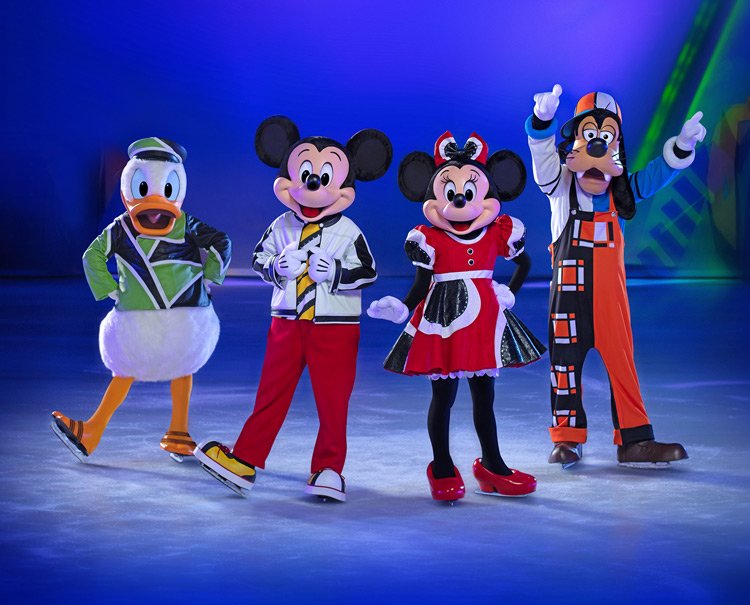
Disney on Ice (Disney)
Last night, my spouse and I took our daughter to Disney on Ice, in SLC. Cost aside, it was a good time. I found myself transfixed by the skill of the skaters. The grace with which they streaked and strode across the ice. Bodies flung to-and-fro with speed and precision, connected to earth by only thin steel blades. And the gymnasts, bending and flexing while suspended from the air, were nearly impossible to look away from. Familiar scenes from Disney films choreographed into flesh and blood.
The physicality and grace of the entire production was engrossing. And I wasn’t the only one caught up in the show. Parents and children alike were engaged in the performance. Children, like my daughter, couldn’t look away, awed by the sight of their favorite film characters come to life. And, like me, their parents were both impressed by the production and thrilled to see their children have so much fun. In fact, seeing the entire performance through my daughter’s eyes was what made the night worthwhile.
But why were we there? Did we drive 45 minutes up to Salt Lake City to see people ice skate? Or did we just want to spend $200 for the hell of it. The answer, I think, is obvious: we were there because the event was Disney themed. I doubt—in fact I can almost guarantee—that an event of similar proportion and production value would draw the same size crowd if it were just focused on ice skating.
Again, this is obvious. People like Disney so they go to Disney themed events and locations—Disneyland, Disneyworld, Disney movies. But what might not be so obvious is how our obsession with familiar intellectual property stifles and obscures the talent and skill that goes into its creation.
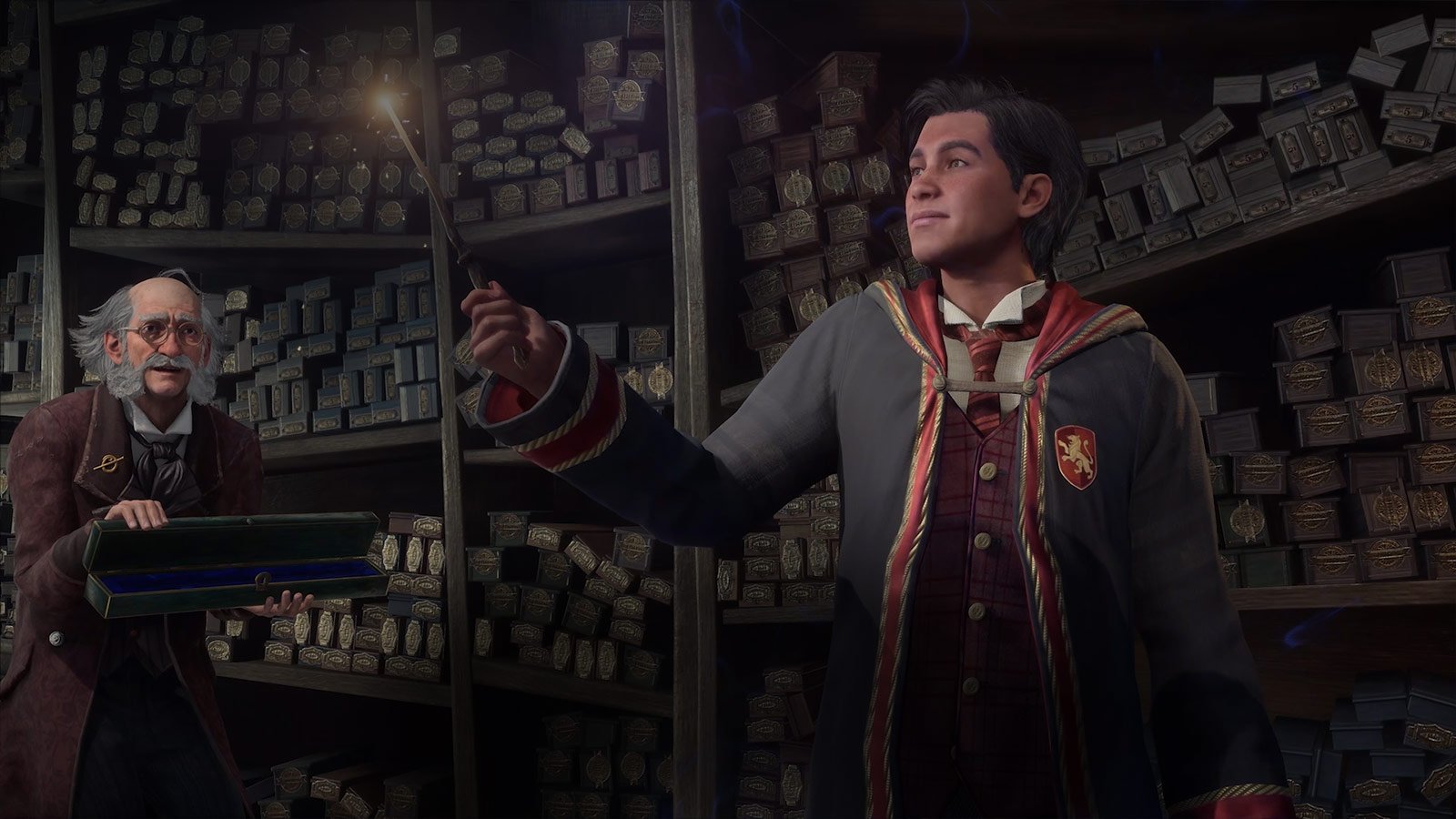
Hogwarts Legacy (Portkey Games)
Another example: Hogwarts Legacy. The new product from Portkey Games is an incredible piece of video game engineering. The world is immersive and delicately constructed. Even if one were to limit themselves to exploring Hogwarts, they couldn’t help but be amazed by the level of detail that went into its creation. The story is, too, is engaging, avoiding the pitfalls of being closely connected to the plots created by J.K. Rowling.
Even the games formal elements, its mechanics and player progression systems, manage to adroitly capture the flexibility and spontaneity of using magic (as if I knew). But why does the game exist? Another obvious answer: because of its relationship to the Harry Potter universe. The entire game, with its impressive formal structure and stylistic elements, would not be possible if it weren’t for the fact that was a guaranteed blockbuster because of its connection to previously existing Harry Potter IP.
At this point, you might say, “well of course these things are attached to Disney and Harry Potter—that’s where the money is.” And you would be right. But therein lies the problem.
These projects, and all projects that spring from massive, established IPs, exist to make money. Any sort of technical innovation or quality that happens to spring into existence alongside them is merely a happy accident compared to the original intent of the project’s creation. The desire for safe, easy ROI is what allows projects like Disney on Ice or Hogwarts Legacy to get off the ground. In this way, technical and artistic genius are subsumed and stifled through the pursuit of safe investments.
But I can already here your protestations. “What’s wrong with safe investment?” “What’s wrong with making money?” In and of itself, nothing.
Safe investments in quality enterprises are important ways to build individual and societal wealth. Without investment in innovative technologies, civilization would progress at a much slower rate. However, art isn’t technology, although the two often influence each other. The primary value that art creates is not monetary—it’s emotional, intellectual, aesthetic, and spiritual.
Somehow, our relationship to art and its creation flipped. Rather than producing art to explore the human condition or add to the worlds beauty, art has become big business. The success of a film, novel, or artwork isn’t defined by how well it develops a theme or pulls off a difficult conceit—it’s by how much money it makes. Top Gun: Maverick didn’t save Hollywood because it was an excellent action film, it saved Hollywood because it made boatloads of cash.
But, what’s that? More protestations? I think I can hear you say, “but that’s just how the world works!,” or “the creation of art has always been inextricably tied in with the production of capital” (wow, cogent thought, reader). And, again, I don’t disagree, but to further illustrate my point, it might be worth it to explore briefly how filmmaking in North America changed in the second half of the 20th century.
In his terrific article for Jacobin Magazine, Jake Ures identifies how a similar trend destroyed the adventurous spirit of filmmaking in 1970s Hollywood. Studios, like any business, wanted to stay afloat but Ures points out that filmmaking is unique among the arts in that it “requires an unusually large financial investment…” with the artists and producers working together to “strike a balance to appease each other’s competing interests — the former to do something unique and interesting, the latter to reduce the chance that it won’t land.”
In other words, the artist and producers work together to create something that is both artistically interesting and financially viable. Throughout the 1970s, studios took massive risks on innovative and daring films, movies like Rocky, Jaws, and Taxi Driver, (movies so embedded in popular culture now that they’re uniqueness is almost impossible to see) while not tying themselves down to any one particular franchise or formula. The result was a vast, eclectic landscape of film that still sits as the highpoint for American Cinema.
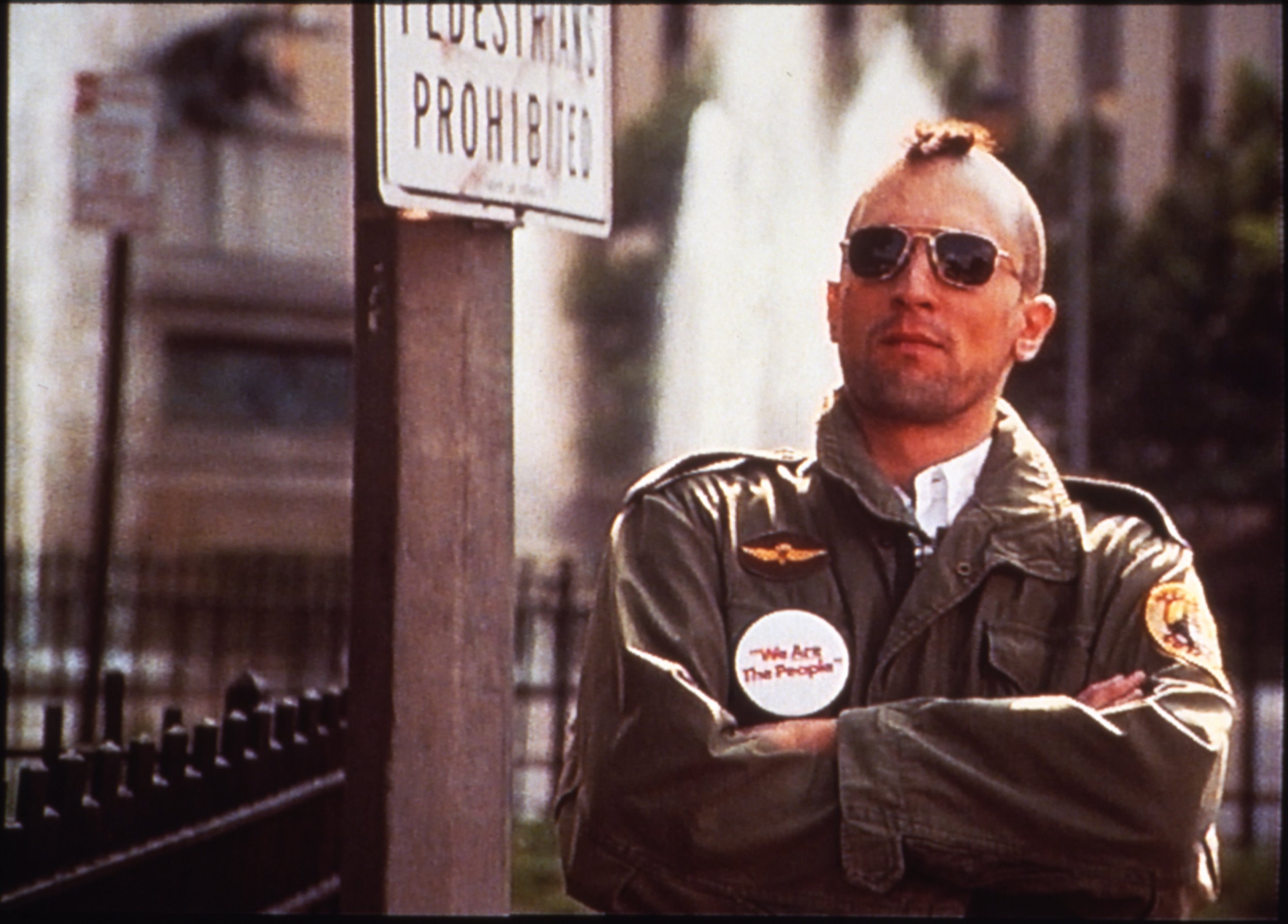
Taxi Driver (Columbia Pictures)
However, in 1977, something changed. Star Wars crashed onto the scene. In very short order, investors realized that it was safer to finance films that people were familiar with than take the risk on an idea that could tank. Suddenly sequels were the secret to success. And what began in film spread throughout other artistic mediums until you get to where we are today.
Film franchises from Marvel, DC, Star Wars, and Star Trek, among others, dominate the box office. Long series of novels endlessly explore the minute details of familiar characters lives or worlds. Even music tends to the sound the same, with record companies really only taking bets on artists that have a certifiably monetizable sound.
Gone are the days in which adventurous entrepreneurs, producers, and businesses took chances on wild artistic ideas. Better to play it safe, to stick with what people like, with what they’re already familiar with, because it’s our craving for the familiar—the nostalgic—that makes money.
To come full circle, the experience of taking my daughter to see an ice dancing show chock full of Disney characters represents the almost complete monetization of our inner lives by large entertainment corporations. We crave the familiar, the comfortable, the nostalgic, because, in a world as chaotic and unpredictable as our own, we can find safety in what we know. And, because mega corporations know us better than we know ourselves—due to the massive amounts of online data we’ve made available to them—they know how to manipulate our innermost desires for comfort and safety, reaping huge profits along the way.
But ultimately what suffers is the creation of art. Immense projects based on familiar IP, with a guaranteed ROI, will always gobble up artistic resources. Why spend time on an avant-garde project that MIGHT make money when you could spent time on something that WILL make money. As long as the relationship between capital and artistic creation remains lopsided, with capital calling all the shots, then the art—in whatever form—that we produce and consume will become safer, more generic, and ultimately more boring than it otherwise could be.
 Tyler Abbott
Leave a comment