Thoughts on Robert Siodmak’s 1944 film The Phantom Lady
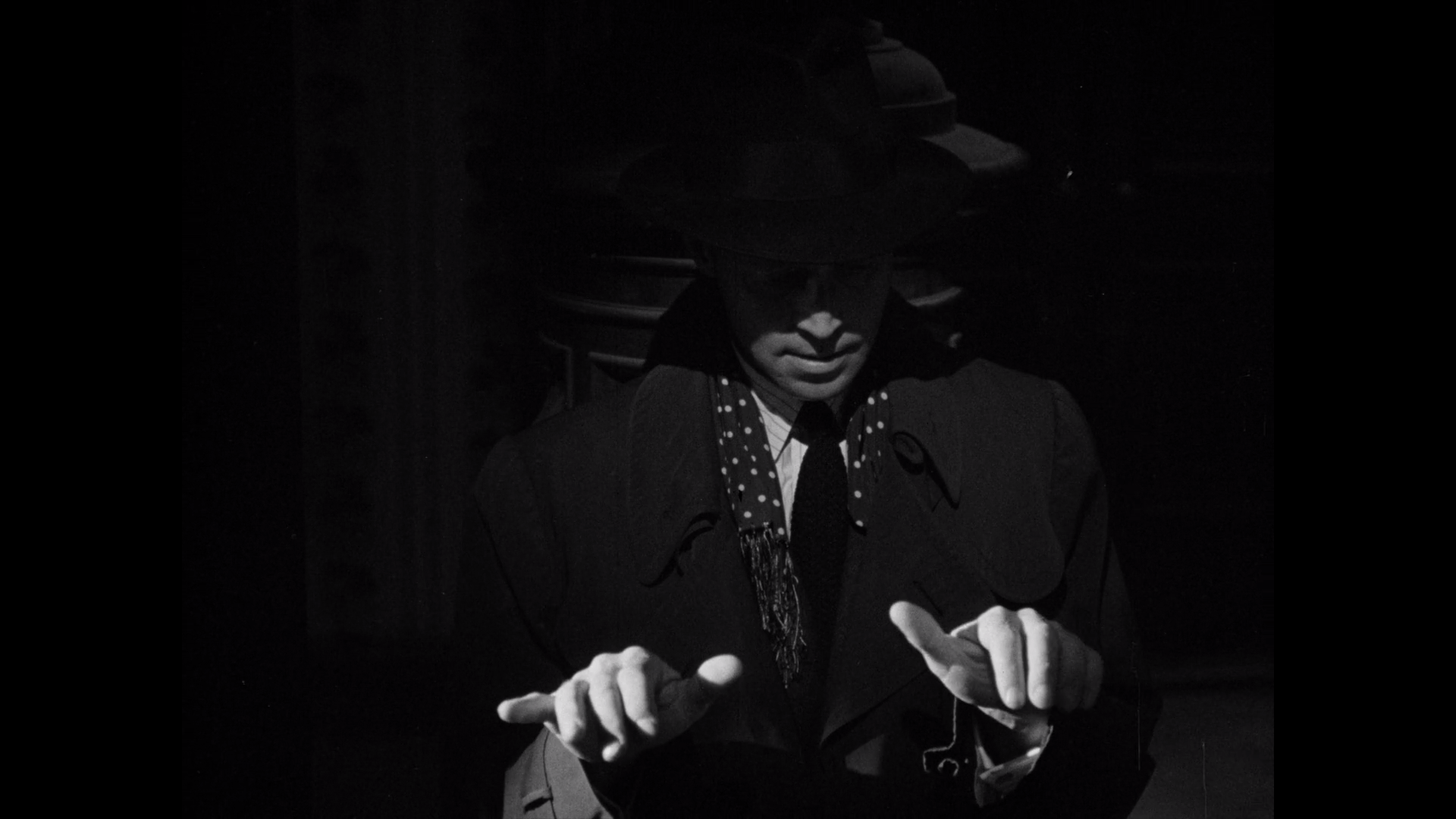
Franchot Tone menacingly admiring his own hands.
The Phantom Lady (1944), directed by Robert Siodmak, is a minor noir classic. The first half of the film is exquisite, a chiaroscuro hallucination full of danger and tension. It follows Carol Richman (Ella Raines) as she delves into the underworld of NYC, seeking out the identity of the only woman who can exonerate her boss of the murder of his wife. The highpoint, and the most striking moment of the film, are the scenes in which Carol seduces the depraved jazz drummer Cliff, played by a lasciviously animated Elisha Cook Jr..
She catches his eye at a big band performance where he plays and, afterwards, allows herself to be led down into an underground storage room where a pack of ratty musicians furiously pump out crazed jazz tunes. In a shockingly erotic moment (for 1944), Carol cheers Cliff on, leering and laughing maniacally, as he wildly performs, with masturbatory intensity, a rapid-fire drum solo. Unfortunately, the film climaxes at this point (no pun intended), and the search for the identity of both the mystery woman and the heinous killer, whose revelation comes far too early, slowly lose their tension until the audience is treated to a predictably saccharine ending.
Despite its flaws, however, its treatment of Cliff and the killer, a psychopathic sculptor, provide us with the chance to think about the ways in which we view art and artists. The film’s two most striking characters—Elisha Cook Jr.’s lewd drummer Cliff and the paranoiac killer, played by an aristocratically menacing Franchot Tone—are both artists of one kind or another. We’re frequently treated to images of their hands in action. Cliff plays drums with a primal sexual energy that borders on the pornographic while Tone’s killer character, whose name I won’t reveal, frequently examines and philosophically meditates on the creative and destructive property of the human hand. At one point, before garroting poor Cliff, he says:
“Oh, how interesting a pair of hands can be. They can trick melody out of a piano keyboard. They can mold beauty out of a piece of common clay. They can bring life back to a dying child. Yeah, a pair of hands can do inconceivable good. Yet the same pair of hands can do terrible evil. They can destroy, whip, torture, even kill. Wish I didn’t have to use my hands to hurt another human being.”
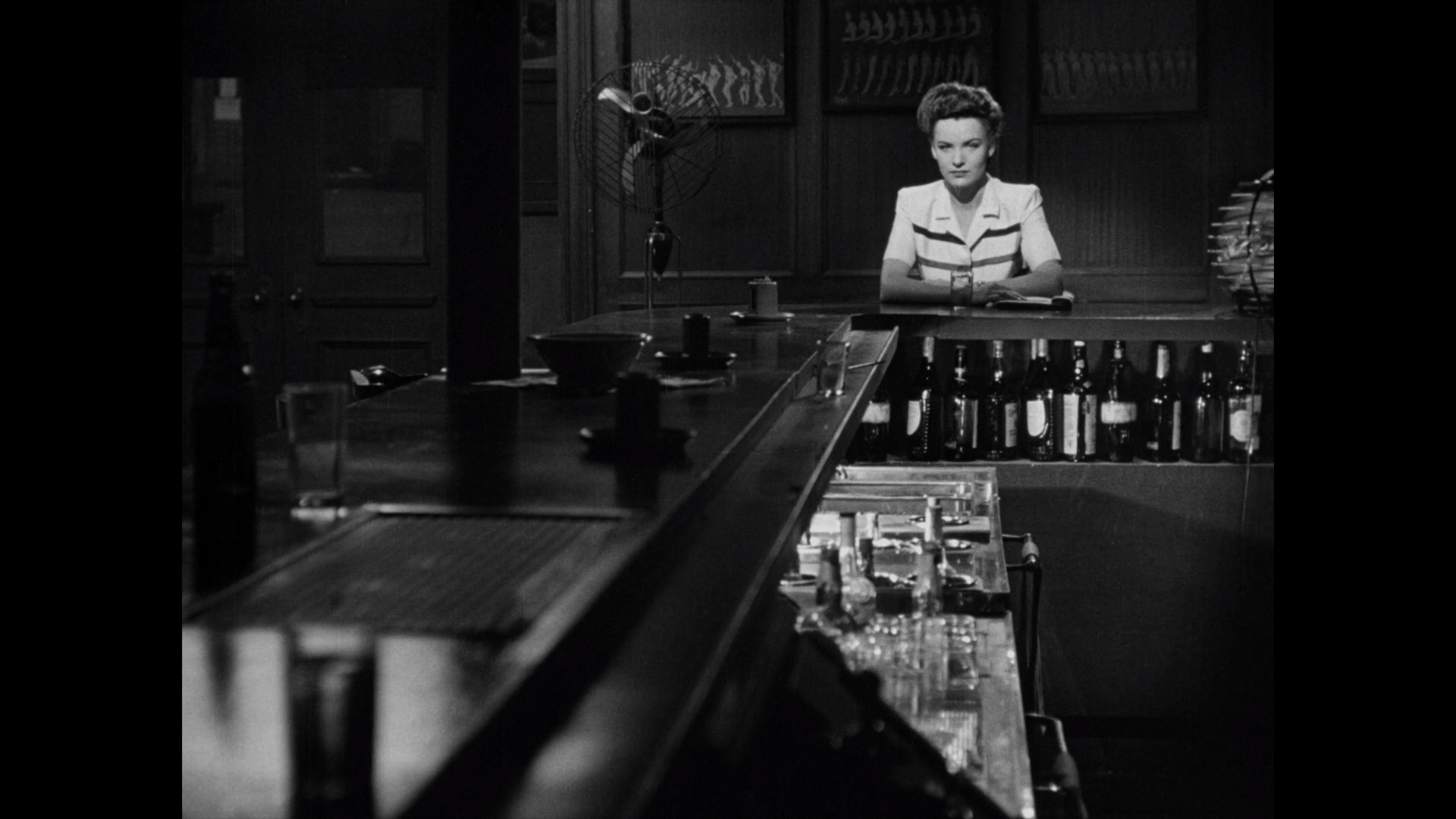
Ella Raines as the noble, brave Carol Richman
Hands abound in the film. A cello player’s hands crawl salaciously up and down the neck of his instrument; a pianist smacks wildly at his keyboard; an engineer sketches out blueprints; a secretary carefully scrawls down her boss’s instructions; and various women’s hands gently caress the absurd hat that acts as the film’s primary macguffin. The hands reveal the characters, but, ultimately, they shine light on our own prejudices.
The secretary, the engineer, the hatmakers and hat caressers—they’re all incapable of evil. They use their hands idealistically, or efficiently, or productively. They create value, for themselves and those around them. The artists, however, like Cliff the drummer and Tone’s mad sculptor/strangler, might produce striking works of art, but they’re fundamentally degenerate. The musicians’ hands, striking out frantic chords and sensuous rhythms, are stylistically linked in the film with unbridled sexuality, with coarse vulgarity and perversity. Out of sight, in hidden underground storage rooms, the musicians feverishly play wild jazz. The music and imagery pulse with primitive lust. The discomfort of Ella Raines’ character, the innocent, brave Carol, makes it clear to the audience that she has entered a den of iniquity and that, when she escapes, she’s lucky to do so with her virtue intact.
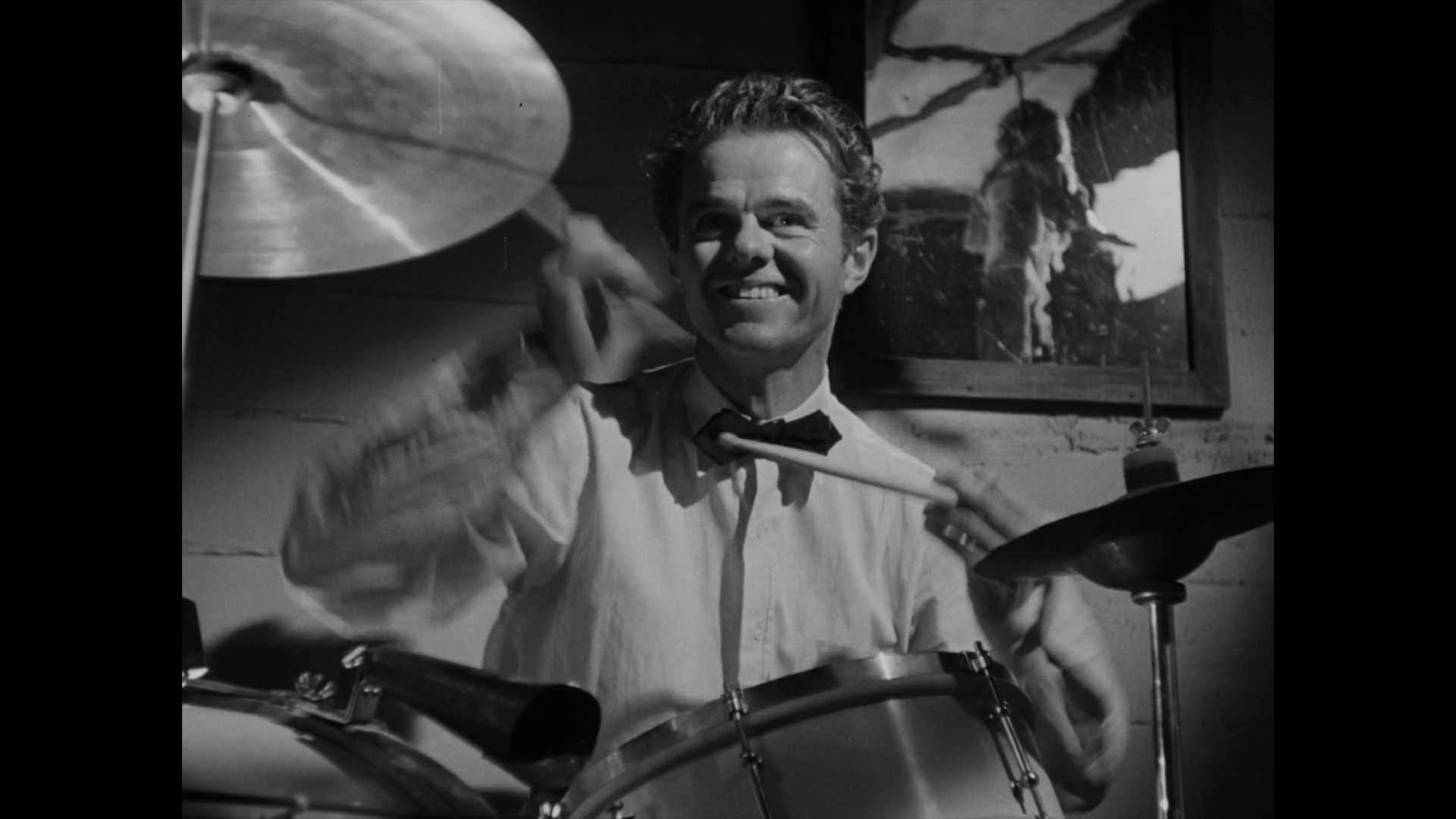
Elisha Cook Jr. as Cliff, the degenerate drummer.
On the other end of the artistic spectrum, Franchot Tone’s killer, a megalomaniacal sculptor whose paranoia and egomania eventually prove to be his downfall, uses his hands to produce both murders and avant-garde sculptures. Despite the veneer of respectability and prestige afforded by his success, he is fundamentally no better than Cliff, the perverted drummer. He sees himself as a sort of Nietzschean Übermensch—a supremely gifted individual whose life and art is far more important than everyone that he has to annihilate in order to hide his original crime, a murder committed out of wounded pride and ego. His insanity nearly results in the execution of the idealistic engineer he frames for the initial murder. In this relationship we see the core dynamic of the film: the depraved artist pitted against the idealistic engineer.
The Phantom Lady implicitly asks the question: is the art of the artist of any merit if its’ creator is a monster? Undeniably, the verdict it spits out is a resounding “no.” Far greater is the honest work of the engineer and the secretary, the milliner and the detective. They succeed not because of, but in spite of, the hideous artist and his depraved creations.
But the question then becomes: do we agree? Is the artist, despite the beauty of his art, fundamentally evil? Given free reign, will the artist destroy the honest producers of value who propel society forward? Should we, like Plato in his treatment of poets in The Republic, expel all artists from our ideal city? Or do we disagree with The Phantom Lady’s premise and, instead, affirm that it’s the artists and their art, whether musical or material, that contribute just as much, if not more, to the human experience?

The hat of the titular phantom lady.
 Tyler Abbott